
Annual retreat 2026
Few days in Lyon
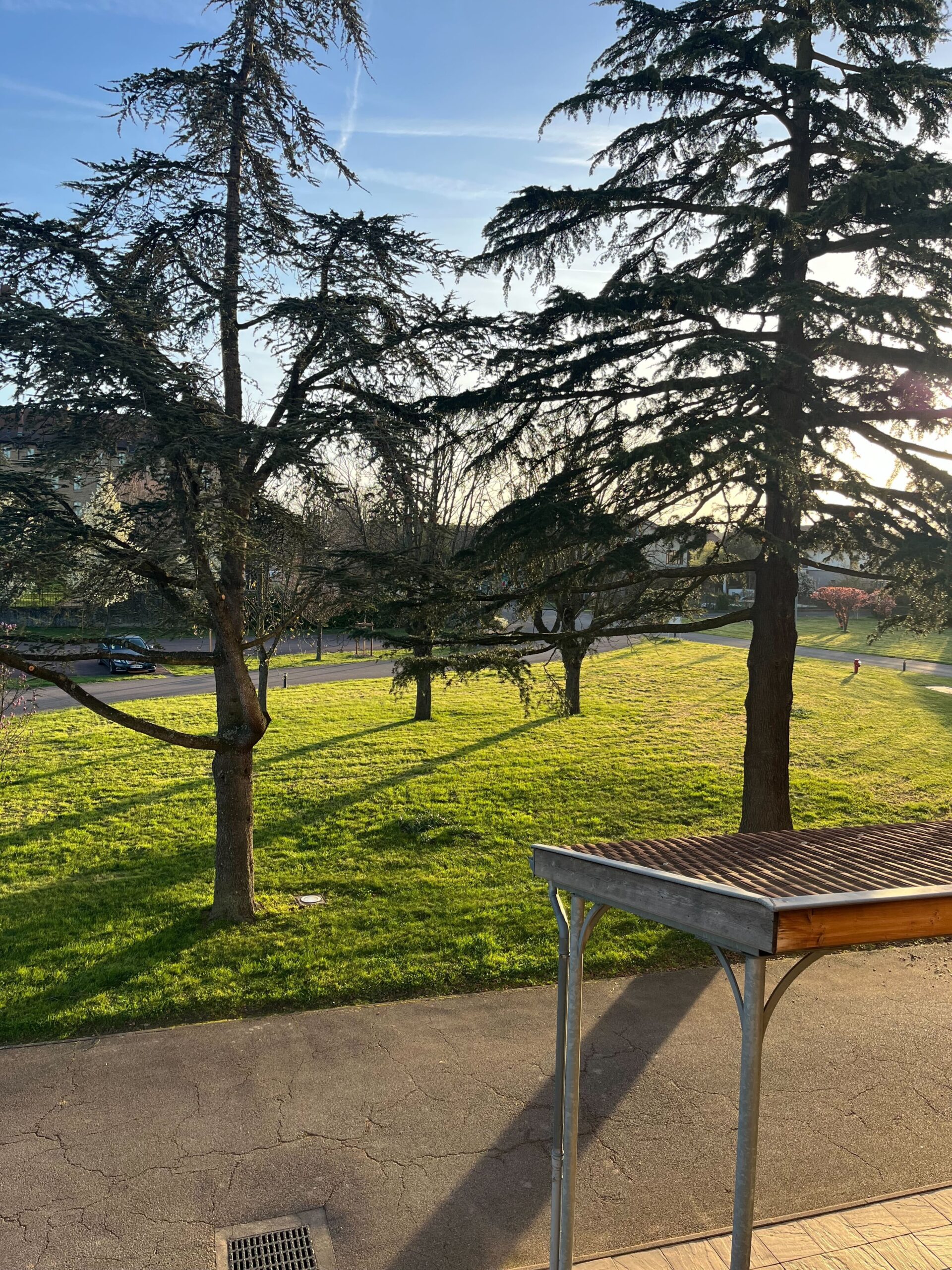
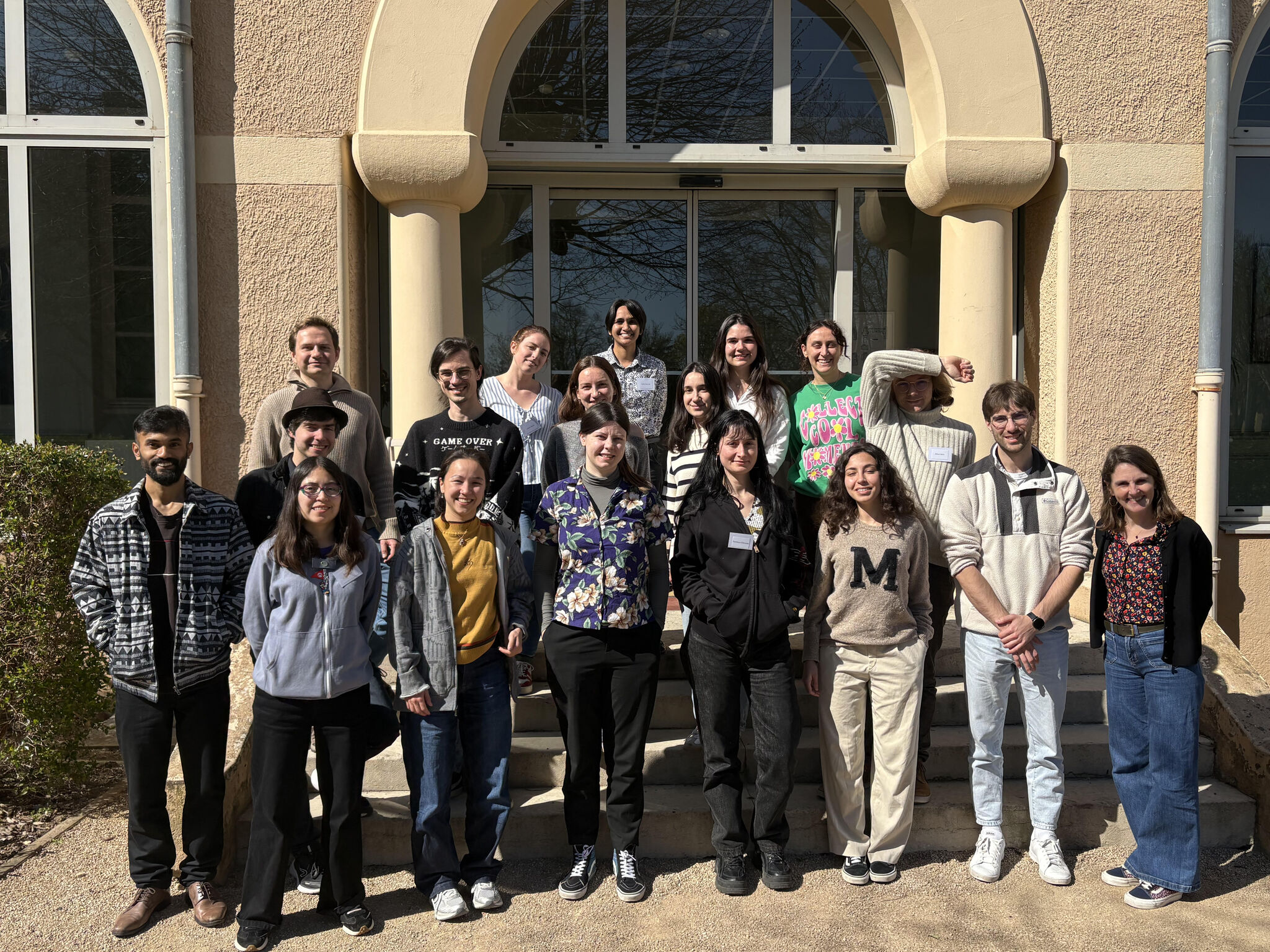
The M4DI Consortium gathered together this year in Lyon for the second edition of its project retreat held at the Domaine Lyon Saint Joseph, near the city center, from March 16-20 (Monday-Friday), 2026.
As in the previous edition, the retreat was divided into two parts:
- one for the entire Consortium
- the other reserved for doctoral students
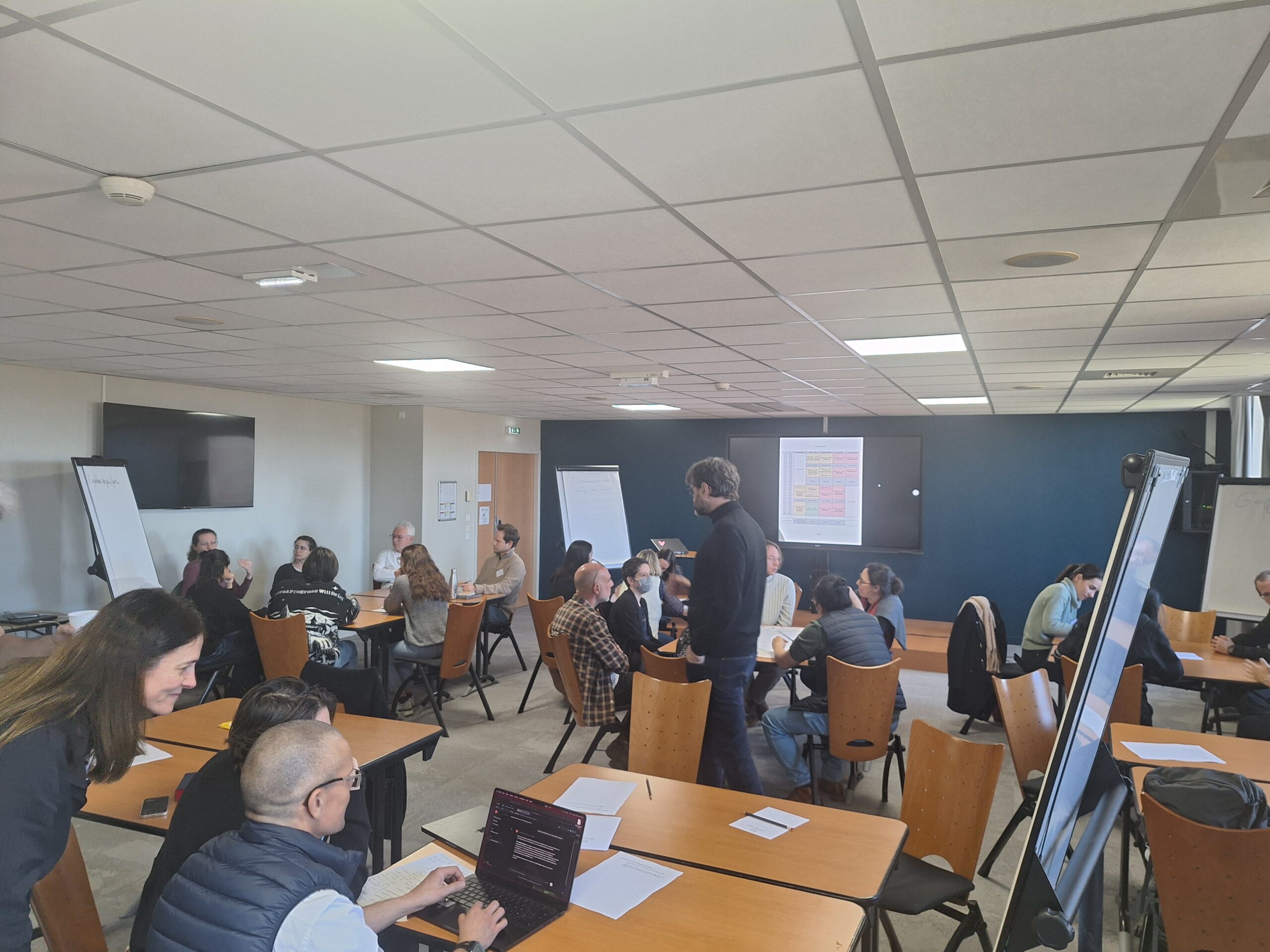
The first part brought together all consortium members. The retreat opened with a collective intelligence session, facilitated by Farah (from BWLW). This was followed by scientific presentations delivered by consortium members (both doctoral students and PIs) and also two invited speakers. Participants then worked in groups to discuss the long-term vision of the M4DI project and decisions to be made. Following the collective intelligence session, we also organized a World Café to share tips and tricks on various topics. We called this session “Marché aux Astuces” (tips and tricks market).
The second part was dedicated to doctoral students. They invited two external speakers: Muriel Mazet who introduced discussion about post-doctoral opportunities and Carol Bausor who provided guidance on effectively presenting their research work. A world Café session was also organized to exchange and share tips on various topics like posters, scientific papers or presentations. In addition, an helpathon session was held, folowing the same format introduce in September 2025. New this year: this part was opened to other doctoral students from other PEPR SN projects. About ten external doctoral students joined the M4DI doctoral students for these two days.
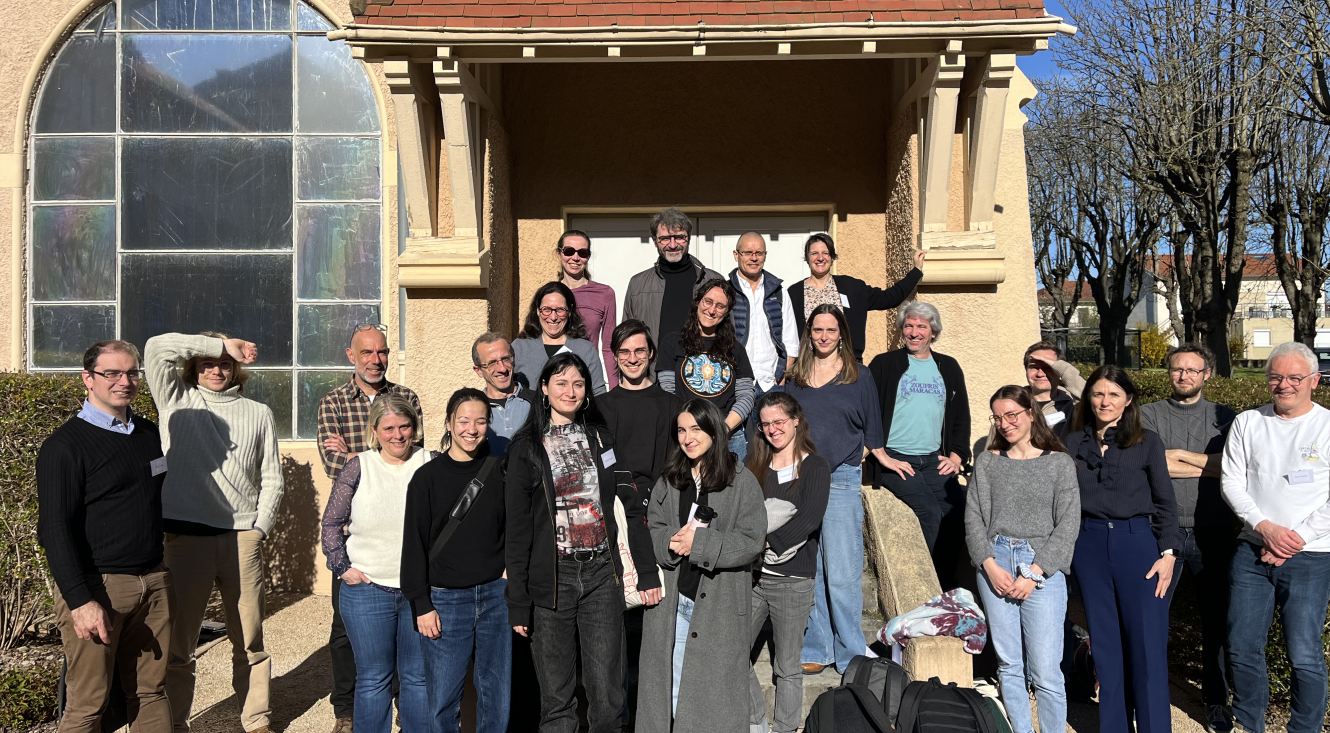
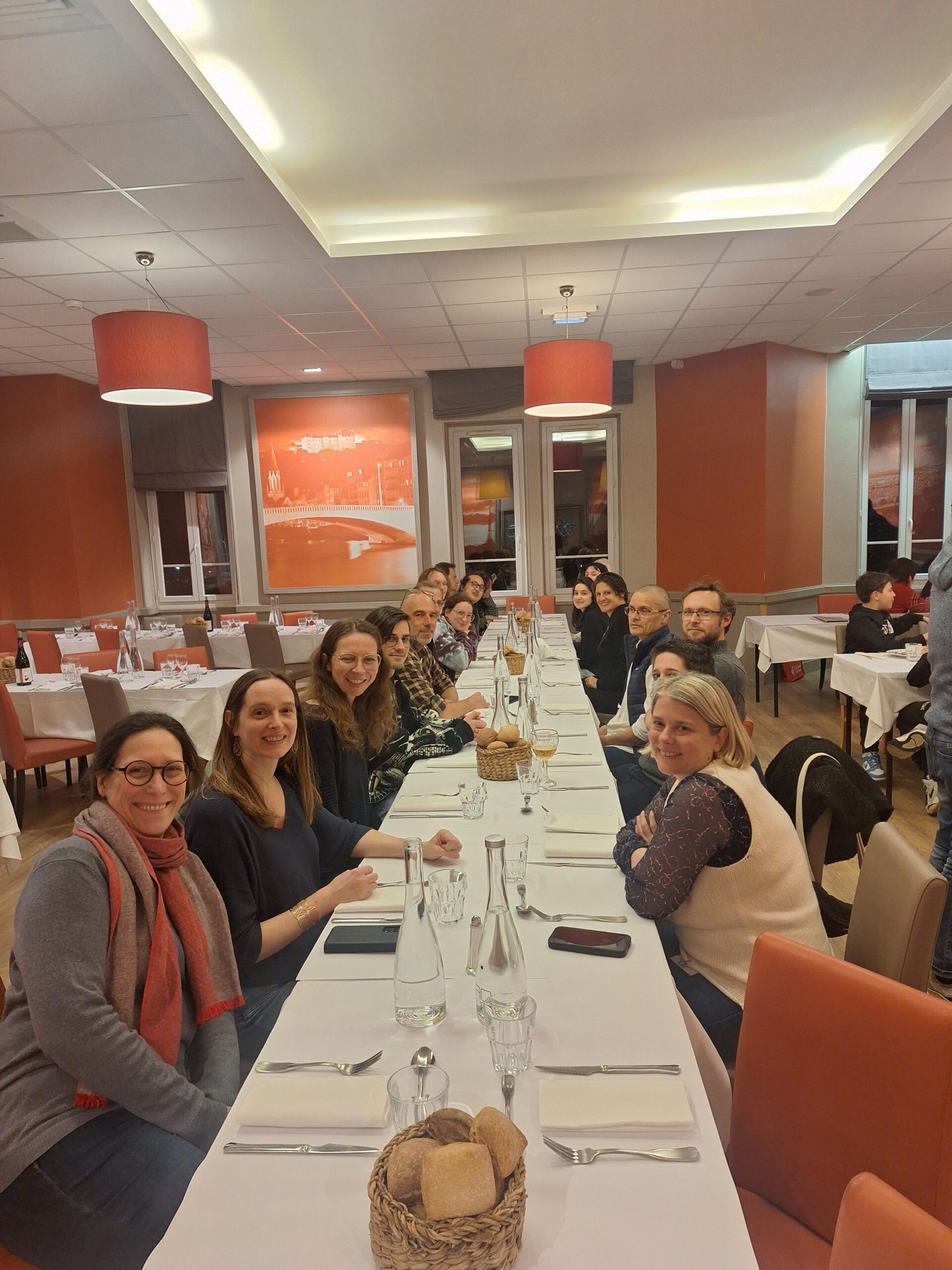
We gathered the feedback of some PhDstudents:
Could you summarize the M4DI project in few lines?
It’s a project that brings together researchers in multimodal data integration to build the methods needed to make sens of heterogeneous data in the biomedical context.
M4DI is a project where PhD student have several labs, so collaboration is key!
What are your feelings about the consortium?
Honestly, really stimulating. I enjoy presenting my work to the group because everyone comes with a different angle, which makes me think about my own research differently.
Could you describe how the Collective Intelligence session that you attended on the onday afternoon impacts your work?
It doesn’t change much about my current work right now since I’m not managing a team, but it did shift something in how I think about group dynamics, the idea that everyone shared responsability for how things are going, and that my input (as a PhD student) matters just as much as anyone else.
Did you find it interesting?
Yes! One thing I’m taking away is writing my ideas down instead of interrupting someone.
For you, what is the interest of sharing your work with others phD students?
It was a low-pressure space to talk about my work. Having to explain my project to PhD students working on different projects pushed me to clarify what I’m doing and why (which is more valuable than in sounds).
If you had to summarize the “Helpathon” section in two lines, what would you say?
Each PhD student brings a problem they’re stuck on, and the rest of the group give their ideas on it.
What was your favorite moment of the retreat, and why?
The World Café on the consortium’s long-term vision. I found really interesting to hear how researchers think about where a big project is heading.
If you had to describe this retreat in three words, which would you choose?
Collaborative, Welcoming, Supportive

Could you summarize the ShareFAIR project in few lines?
Sharing health data is challenging due to privacy regulations, technical constraints and large data volumes, which limit collaboration and reuse. As an alternative, data analysis pipelines – workflows – can be shared to reproduce analyses without moving data. However, these workflows are often complex and difficult to understand and reuse, making reproducibility challenging. ShareFAIR addresses this by providing approaches to better describe workflows through structured annotations and execution traces, making them more transparent and reproducible. It also develops methods to make workflows reusable acrosse contexts and to automatically extract them from text and data.
Could you summarize your thesis project in few lines?
My PhD project aims to design an original query language allowing the querying of many heterogeneous workflow sources in a simple way, considering not only workflow design but also workflow execution. This query language will retrieve workflows described in a model capturing both their prospective and retrospective provenance of the workflows. In addition, a relaxation approach will be introduced to allow the retrieval of approximate results when queries fail to get any exact results.
Could you describe how the Worl Café session that you attended on the Wednesday afternoon?
It was good to share and receive tips on activities that every PhD student does, such as prepraring presentations and posters, or writing articles.
Did you find it interesting?
It was great to have my first discussion with the other PhD students I hadn’t met before, on topics we share in common, regardless of our thesis fields.
For you, what is the interest of sharing your work with others phD students?
Sharing or discussing my work with others always gives me new perspectives that I migh not have considered, as well as ideas to expand my research.
What was your favorite moment of the retreat, and why?
It was during Carol Bausor’s workshop where she gave use tips for giving a pitch in a fun and interactive way, and reminded everyone how important our thesis projects are.
If you had to describe this retreat in three words, which would you choose?
Good, Inspiring and Relaxing
Could you summarize your thesis project in few lines?
My PhD project focuses on the integration and analysis of proteomic and metabolic data from extracellular vesicles isolated from the plasma of patients with obesity, together with associated clinical data. The goal of my research is to achieve a comprehensive molecular characterization of plasma-derived extracellular vesicles in obesity from a multi-omics perspective, with the aim of identifying molecular signature associated with different stages of the disease.
Could you describe how the Worl Café session that you attended on the Wednesday afternoon? Did you find it interesting?
I had never attended a World Café before, and I really liked the format. I found it especially interesting that the setting was very casual and that we could simply exchange tips or ask questions based on personal experience. I gained useful perspectives on article writing and even learned about a new type of paper, a benchmarking article, which I did not know existed and which related closely to work I am currently doing. Realizing that this type of work can also lead to a publication was particularly valuable, as it made me see that my own benchmarking work could also become publishable.
For you, what is the interest of sharing your work with others phD students?
For me, the M4DI retreat represented an opportunity to discuss common challenges as a PhD student focusing in computational Biology and Multi-omics Integration. Since my lab is primarily focused on Cell Biology and Molecular Biology, and I do not often have the chance to exchange ideas with other computational biologists. It was also an opportunity to receive technical feedback on the R package I am currently developping. During the Helpathon, I received valuable suggestions to address some issues related to the package’s size and weight. I also enjoyed learning more about the work of the other students, and it even led me to consider applying temporal knowledge graphs to integrate the omics data from my clinical cohort.
If you had to summarize the “Helpathon” section in two lines, what would you say?
A session in which each student can share research problems of any kind (technical, with literature search, with publishing, etc…) and the rest of us give suggestions/feedback in a 15 min window.
What was your favorite moment of the retreat, and why?
I’m undecided between the Helpathon and the “Soft Skills Communication” workshop by Carol Bausor. The Helpathon was particularity useful for the technical aspects of my work, but I do not think I will ever forget Carol’s workshop. She has a unique style, and her presentation tips will leave a lasting impression on me. I am now more aware of the areas I need to improve, such as the volume and tone of my voice, as well as using gestures that are in sync with what I am trying to communicate.
If you had to describe this retreat in three words, which would you choose?
Sharing, Consulting and Fun
Other posts related to the retreat: